
Table of Contents
- What Value-Add Multifamily Investing Means and Why It Carries Risk
- Execution Risk: Construction Delays and Cost Overruns
- Market and Leasing Risk: Missing Rent Targets
- Financing and Interest Rate Risk
- Tenant Disruption, Compliance, and Reputational Risk
- Due Diligence and Underwriting: Your First Defense
- Mitigating Value-Add Risk: A Risk-Centered Framework
- Frequently Asked Questions
Last Updated: October 12, 2026
What Value-Add Multifamily Investing Means and Why It Carries Risk
Value-add multifamily investing is a real estate strategy where investors buy apartment properties below market value, then improve them through renovations and operational changes to increase rents and property value.
But here’s what separates the winners from the ones that fail: execution. Value-add multifamily risks are substantial, and they compound quickly. Construction delays push timelines. Cost overruns eat into profit margins. Rent growth doesn’t materialize as projected. Interest rates shift. Tenants resist displacement. A deal that looked solid in the underwriting can unravel in months.
Asset Point Capital finances the acquisitions and construction phases for value-add operators. The difference between successful and unsuccessful deals isn’t luck. It’s how carefully investors identify and plan for the specific risks that derail these deals.
This guide walks through the major value-add multifamily risks, what causes them, and how to defend against them before capital is committed.
Execution Risk: Construction Delays and Cost Overruns
Construction delays and cost overruns are the most common killers of value-add multifamily deals. They’re also the most predictable. Yet they still surprise investors because they underestimate complexity or trust timelines that were never realistic.
How Construction Delays Cascade Into Lost Returns
A six-month construction delay doesn’t just shift your timeline back six months. It compounds across multiple financial levers.
Consider a deal where you projected stabilization in 18 months. Rents were supposed to rise from $1,200 to $1,500 per unit. Exit was planned for month 20. A six-month delay pushes stabilization to month 24. Your hold period extends. Debt service continues on borrowed capital that’s no longer generating the projected cash flow. Your exit cap rate assumption may no longer hold if market conditions have shifted.
Common causes of construction delays include:
- Supply chain disruptions, Materials take longer to arrive than quoted
- Labor shortages, Contractors cannot find enough skilled workers to maintain schedule
- Permit and inspection delays, Local agencies move slower than expected
- Change orders, Unforeseen conditions discovered mid-project require scope changes
- Contractor underperformance, The team you hired cannot execute at the speed promised
- Weather and site conditions, Exterior work, foundation issues, or utility relocations take longer
The financial impact is severe. Every month of delay extends your debt service costs, delays rent growth, and pushes your exit further into an uncertain future.
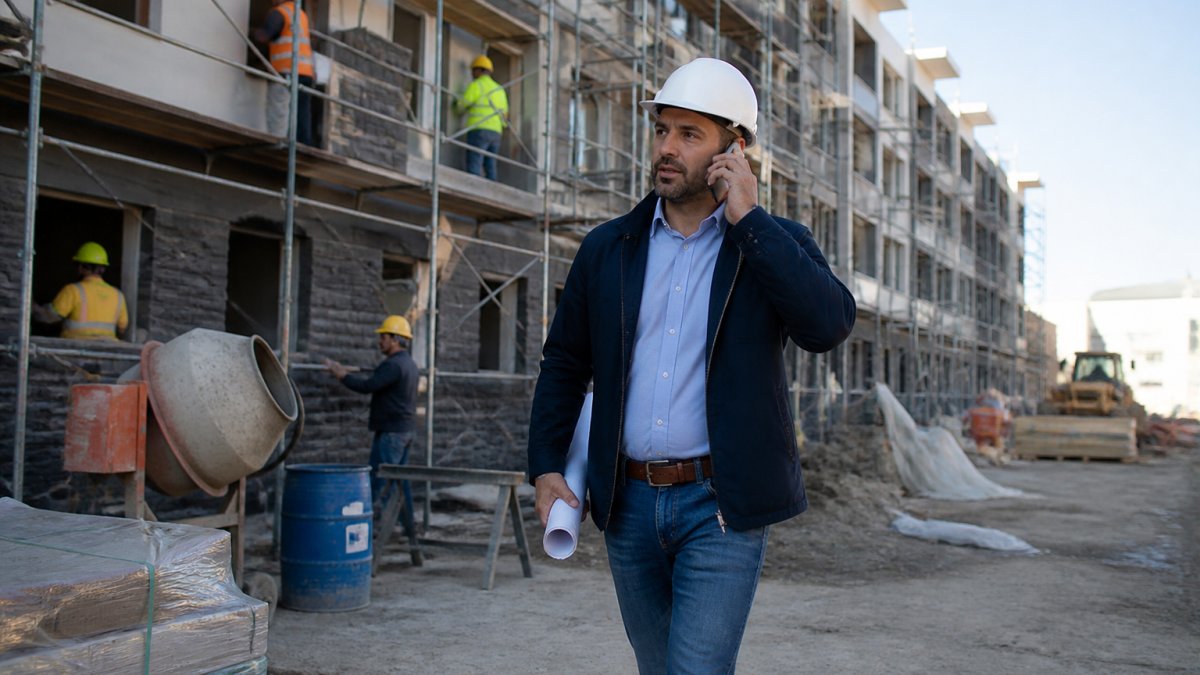
Why Renovation Budgets Fail
Most renovation budgets fail for one reason: they’re built on incomplete information.
You walk a property, take photos, and estimate costs per unit. You add a contingency. Then construction begins and the real scope emerges. The walls come down and you discover mold. The electrical system is worse than expected. Plumbing needs replacement, not repair. The structural issues are more extensive.
This is not a contractor problem. This is an underwriting problem. You didn’t know what you didn’t know.
Effective renovation budgets require:
- Detailed unit-by-unit inspection, Not a walk-through. A thorough assessment of every system in every unit type
- Professional cost estimation, Not contractor quotes alone. Independent cost data from recent comparable projects
- Contingency that reflects risk, Not a flat 10%. A contingency sized to the unknowns in your property condition assessment
- Staged execution, Start with a pilot unit or two, validate costs, then scale to full property
The renovation budget failure often looks like this: you estimate $5,000 per unit. Contingency is $500 per unit (10%). Real costs come in at $6,500 per unit. You’ve now consumed your entire profit margin before a single rent increase takes effect.
Market and Leasing Risk: Missing Rent Targets
You underwrite the deal on the assumption that rents will rise from $1,200 to $1,500 per unit. The market study supports it. Comparable properties nearby command $1,500. So you model it as a certainty.
Then you finish renovations and discover the market has softened. Or your tenant base cannot afford the new rents. Or you’re competing against newer buildings with lower rents. Or economic conditions have shifted and vacancy is rising across the market.
Missing rent targets is the second major killer of value-add multifamily deals. It’s also harder to predict than construction delays because it depends on market conditions you cannot control.
Risks in the leasing phase include:
- Market rent growth doesn’t materialize, Rents stay flat or grow slower than projected
- Tenant resistance to rent increases, Existing tenants leave rather than accept large increases
- Inability to lease units at target rents, New units cannot command the projected rates
- Longer lease-up periods, Units take months longer to fill than modeled
- Tenant quality degradation, To hit occupancy targets, you accept lower-credit tenants
The financial impact is direct. If you projected $1,500 rents and achieved $1,350, your NOI is now 10% lower than underwritten. Your exit valuation drops. Your returns fall.
Financing and Interest Rate Risk
Most value-add deals are financed with construction loans or bridge financing. These loans carry variable rates or short terms with refinance risk. Interest rate risk is often overlooked in underwriting because rates were stable for years. That era has ended.
Consider a deal where you borrowed at 7.5% on a two-year bridge loan. You modeled stabilization in 18 months, with a refinance to a permanent loan at 5.5%. If rates have risen to 8% by month 18, your refinance cost is now higher. Your permanent loan payment increases. Your cash flow margin shrinks.
Key financing risks in value-add deals:
- Construction loan cost overruns, The loan has a cost cap. Overruns come from your pocket
- Interest rate increases before refinance, Rates rise between loan origination and stabilization
- Refinance challenges, The property doesn’t stabilize as planned, making refinance difficult
- Debt service coverage ratio shortfalls, Achieved cash flow is lower than required for refinance
- Maturity risk, The loan matures before the property is stabilized or sold
- Lender non-performance, Your lender cannot fund the full commitment
The financing risk compounds with execution risk. A six-month construction delay extends your bridge loan term. Extended bridge terms cost more. Your refinance happens in a different rate environment.
This is where the right financing partner matters. Lenders who understand value-add deals, who can move quickly when conditions change, and who have the capital to fund through challenges make the difference between a deal that works and one that doesn’t. Real Estate Investment loans, including New Construction Loans and Bridge Loans, are designed for these exact scenarios.
Tenant Disruption, Compliance, and Reputational Risk
Renovating a multifamily property while tenants live there creates friction. Noise, dust, construction access, and unit disruptions frustrate residents. Some leave. Others withhold rent or file complaints. Your occupancy drops during the renovation period, reducing cash flow when you need it most.
Compliance risks are also material. Renovation work triggers building code reviews. Lead paint disclosure is required in older buildings (the EPA). Accessibility standards apply. Eviction procedures must follow local law. A misstep exposes you to fines, legal liability, and project delays.
Reputational risk is less obvious but real. Tenant complaints, social media posts, and local media coverage damage your ability to lease units at target rents. New prospective tenants hear the story. Your brand in that market is tarnished.
Managing these risks requires:
- Clear tenant communication, Explain the timeline, the disruptions, and the benefits upfront
- Relocation assistance, Offer incentives for tenants to move during heavy renovation phases
- Compliance review, Engage legal counsel to review all renovation work against local codes
- Insurance coverage, Ensure liability coverage for tenant injuries and property damage during construction
- Community relations, Engage positively with neighbors and local officials
Due Diligence and Underwriting: Your First Defense
The best time to identify value-add multifamily risks is before you buy. Due diligence is not a checklist exercise. It’s a systematic effort to uncover what could go wrong and whether the deal still makes sense if it does.
Effective due diligence covers:
- Property condition assessment, A detailed inspection by a structural engineer, not a broker
- Environmental review, Phase I environmental assessment to identify contamination risk
- Rent roll and tenant analysis, Verify lease terms, tenant credit, and lease expiration dates
- Operating expense review, Validate utility costs, maintenance, insurance, and staffing against industry benchmarks
- Market analysis, Verify rent growth assumptions with recent comparable lease data
- Financing review, Confirm that refinance assumptions are realistic given current market conditions
- Contractor vetting, Check references, verify bonding and insurance, review past project timelines
- Local regulatory review, Understand zoning, rent control, tenant protection laws, and permit processes
The multifamily renovation cost overruns and timeline challenges are most often caught in detailed property assessments. A structural engineer will identify foundation issues, roof condition, and mechanical system status. That information changes your renovation budget and timeline assumptions.
The multifamily property due diligence checklist should also include sensitivity analysis. Model what happens if rents grow 50% slower than projected. Model what happens if construction takes six months longer. Model what happens if interest rates are 1% higher at refinance. If the deal still works under these stress scenarios, you have a margin of safety.
Mitigating Value-Add Risk: A Risk-Centered Framework
Mitigating value-add multifamily risks starts with acknowledging them. Many investors build deals on best-case assumptions and hope for the best. That approach fails predictably.
A risk-centered framework looks like this:
Step 1: Identify specific risks, Not generic risks, but the specific risks in this deal. This property. This market. This timeline.
Step 2: Estimate likelihood and impact, Which risks are most likely to occur? Which would hurt most if they did? Focus on the high-probability, high-impact ones.
Step 3: Build mitigation into the deal structure, Longer construction timelines. Larger contingencies. Staged execution. Pilot units. Conservative rent growth assumptions.
Step 4: Secure financing that absorbs shock, When delays happen, your lender should be able to fund through them.
Step 5: Monitor and adjust, Track actual construction progress, lease-up pace, and market conditions against plan. When reality diverges from projection, adjust quickly.
A practical approach to value-add multifamily risk management also includes:
- Reserve capital, Keep cash reserves for contingencies, not just for the acquisition and construction budget
- Experienced operators, Partner with property managers and contractors who have done this before
- Regular stress testing, Every quarter, model what happens if key assumptions shift
- Clear exit triggers, Define the conditions that would trigger an early exit rather than continuing to hold
- Insurance and bonding, Ensure contractors are bonded and insured; carry comprehensive liability coverage
Value-add multifamily investing works when execution is disciplined and risks are managed actively. It fails when investors underestimate complexity, trust optimistic timelines, or assume market conditions will cooperate.
The right financing partner absorbs some of this risk by providing certainty and speed when challenges emerge. Asset Point Capital’s nationwide network of over 1,025 niche lending options, combined with firm term sheets within 24 hours and human-led execution, ensures you’re not fighting your lender while you’re fighting your deal. Apply now and get started with a financing partner built for value-add complexity.
Frequently Asked Questions
What are the biggest risks of value-add multifamily investing?
The primary risks are construction delays and cost overruns that compress returns, market conditions that prevent rents from reaching targets, interest rate increases that raise debt service costs, and execution failures where the sponsor fails to deliver the business plan. Tenant disruption during renovations can also drive vacancy spikes. Success depends on accurate underwriting, conservative budget assumptions, and a realistic timeline that accounts for permitting, labor constraints, and material availability.
How should I evaluate multifamily property due diligence before investing?
A thorough multifamily property due diligence checklist should include structural and mechanical inspections, rent comparability studies for your target market, baseline operating expense analysis, tenant lease review and occupancy verification, environmental and title review, and local zoning and rent control regulations. Stress-test the underwriting against 5-10% rent shortfalls, 10-15% cost overruns, and 50-100 basis point interest rate increases. Verify the sponsor’s track record on similar deals and confirm financing is locked or has firm terms before closing.
What happens if multifamily renovation timelines slip and rents don’t reach targets?
Delays extend your holding period, increasing carrying costs and pushing back the exit date when you realize returns. If market rents plateau or decline while you’re still renovating, you may be forced to lease at below-target rates, permanently reducing NOI and property value. This is why renovation timeline buffers and contingency budgets are critical.
How do rising interest rates affect value-add multifamily returns?
If you finance with floating-rate debt or bridge loans, rate increases directly raise debt service costs, reducing cash flow and NOI. If refinancing is part of your exit strategy, higher cap rates at sale lower the property’s value and your proceeds. Lock in fixed-rate financing where possible, or stress-test your returns assuming higher rates at refinancing or sale.